


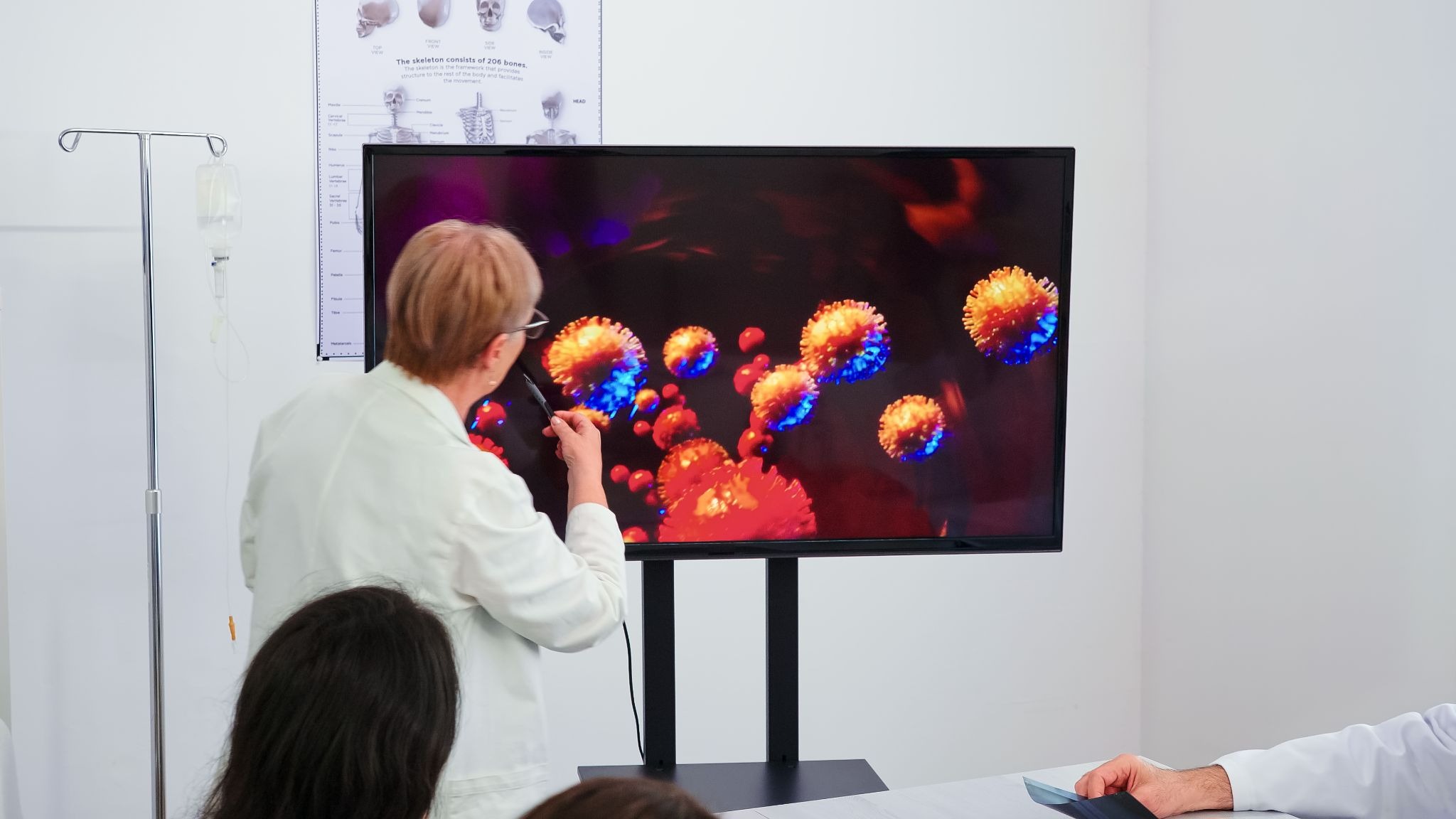
Visual Nomenclature®: A Guide
Complex science can lose its meaning when every presentation explains it differently. A consistent visual approach gives audiences familiar cues that make difficult concepts easier to follow. Visual Nomenclature® connects scientific ideas with a distinctive visual expression that supports clearer communication. It can guide how those ideas appear across animation, video, training, and interactive experiences. The result is a scientific story that remains recognizable as it moves across different formats and audiences.
What is Visual Nomenclature®?
Visual Nomenclature® gives scientific concepts a distinctive and recognizable visual expression. This approach extends a scientific story beyond written messaging. The visual system can then guide how important concepts appear across different communication programs.
Turning Scientific Ideas Into Visual Language
Scientific information often involves processes and relationships that are difficult to explain with words alone. A visual language gives those ideas forms that audiences can recognize more easily. Shapes, movement, spatial relationships, and other design choices can represent recurring scientific concepts. Those choices create visual connections between information presented at different times or through different formats. As audiences encounter familiar cues, they have an existing reference point for understanding related information. The goal is not simply attractive design but a clearer visual explanation of the science.
Creating a Recognizable Scientific Identity
A scientific visual identity begins with the ideas that make a product or concept distinct. Those ideas influence how designers represent mechanisms, biological relationships, treatment concepts, or other scientific information. Repeating selected visual conventions creates familiarity without making every communication look identical. Audiences can recognize related concepts while still receiving information suited to each format. This approach also gives creative teams a common direction when developing new materials. Over time, the science gains a visual identity that can remain recognizable across communications.
Connecting Visuals With Scientific Meaning
Effective scientific visuals need a clear reason for every important design choice. A shape, movement, or relationship should communicate something about the underlying scientific concept. This connection prevents visual elements from becoming decoration that distracts from the message. It also helps teams decide which creative ideas support the scientific story and which do not. As the system develops, those meaningful choices can become familiar cues across multiple materials. The resulting visual language stays closely tied to what audiences actually need to understand.
How Does Visual Nomenclature® Work?
The process starts with understanding the science before deciding how it should look. Important concepts are organized into a clear story and then translated into visual forms. Those forms can later guide animation, video, interactive programs, and other communications.
From Scientific Platform to Visual System
A scientific platform provides the foundation for deciding what audiences need to understand. It organizes important product concepts and the supporting science into a more focused framework. The Science Story® connects those concepts through a clear narrative. Key messages and defined terminology can further clarify how teams communicate the story. Visual Nomenclature® then gives the scientific concepts their distinctive visual expression. The visual system therefore grows from the science rather than from unrelated creative ideas.
From Visual System to Communication
Once the visual direction exists, teams can apply it across appropriate communication formats. An animation might use established visual cues to show a biological process over time. An interactive experience could use related cues while allowing users to explore the information themselves. Training materials and presentations can also carry recognizable elements from the same visual framework. The execution changes because each medium communicates information differently. However, the underlying visual logic can keep each experience connected to the same scientific story.

Adapting the System as Science Develops
Scientific knowledge and communication needs can change throughout a product’s development. A useful visual system should be flexible enough to accommodate new information. Teams may need to introduce new concepts without abandoning visual relationships audiences already recognize. Clear design principles make those additions easier to manage across existing and future materials. The system can grow while maintaining its connection to the original scientific story. That flexibility helps visual communication remain useful beyond a single project or campaign.
Visual Nomenclature® vs. Medical Animation
Visual Nomenclature® and medical animation serve related but different purposes. The visual system establishes how scientific concepts can look and relate to one another. Medical animation provides one way to bring those concepts to life.
Visual Strategy Comes Before Animation
Medical animation works best when the scientific message already has a clear direction. Otherwise, strong imagery may attract attention without reinforcing the ideas audiences should remember. A scientific platform can first establish the concepts, supporting messages, and central narrative. Visual Nomenclature® can then define a recognizable visual expression for those ideas. Animators use that foundation when deciding how to present movement, relationships, and scientific processes. This sequence keeps creative choices connected to the communication strategy rather than treating visuals as decoration.
Animation Brings the Science Into Motion
Animation can show scientific events that happen too quickly, too slowly, or at a microscopic scale to observe directly. It can also demonstrate sequences that become cumbersome when explained through text alone. A visual system provides recognizable cues that animation can carry throughout those sequences. Movement then adds another layer by showing how processes change or interact over time. The same visual ideas may later appear in videos, websites, presentations, or digital programs. This continuity helps separate the communication format from the broader visual strategy behind it.
How Visual Science Improves Understanding
People understand complex information more easily when they can see how individual ideas connect. Scientific visualization can organize those relationships without removing the detail that gives them meaning. A well-planned visual framework therefore supports both comprehension and continuity.
Making Complex Information Easier to Process
Scientific explanations can become overwhelming when several unfamiliar concepts appear at once. Visual organization can separate those concepts while still showing how they influence one another. For example, a diagram might distinguish stages within a biological pathway using consistent visual cues. Animation could then show how one stage leads to another over time. These approaches give audiences another way to process information besides reading technical descriptions. Clear visuals do not replace scientific detail, but they can make that detail easier to follow.
Helping Audiences Follow a Scientific Story
Good scientific storytelling gives audiences a logical path through complicated information. Each concept should connect naturally with the next instead of appearing as an isolated fact. Visual cues can reinforce those connections and help viewers remember where new information fits. Science Story® is a clear narrative developed from a broader scientific platform. Visual Nomenclature® gives that story a visual dimension that can continue across communication formats. Together, the narrative and visual approach can make complex science more approachable.
Improving Recall Across Communications
Understanding information once does not mean audiences will remember it later. Consistent visual cues can create useful connections between earlier learning and later communications. A familiar representation may remind viewers of a mechanism or concept they encountered previously. That recognition can reduce the amount of explanation needed to rebuild context from the beginning. It also helps separate important concepts from less meaningful visual details. Over time, a coherent visual system can support both understanding and recall.

Building a Consistent Visual Framework
Scientific communications often expand across teams, agencies, programs, and digital channels. Without shared direction, the same concept may look different each time audiences encounter it. A visual framework provides enough consistency to connect those experiences without making every asset identical.
Defining Repeatable Visual Conventions
Repeatable visual conventions give teams familiar ways to represent recurring scientific ideas. One visual treatment might represent activation, while another could communicate inhibition or progression. The exact choices depend on the scientific story and the concepts being explained. Clear conventions help different creative teams interpret those concepts consistently. They can also reduce unnecessary reinvention when teams develop additional communication materials. Consistency works best when every convention carries meaning, not just visual style.
Maintaining Meaning Across Formats
Scientific information rarely stays within a single presentation or communication channel. The same story may appear in videos, websites, training programs, simulations, or interactive experiences. These formats are part of the broader scientific and digital communication capabilities. A shared visual framework can connect them while letting each format use its strengths. Animation may emphasize movement, while an interactive program gives audiences more control over exploration. The format changes, but familiar visual relationships can keep the underlying science connected.
Balancing Consistency With Creative Flexibility
Consistency should not force every scientific communication into the same visual template. Different audiences and formats may require changes in detail, pacing, or presentation. A strong framework defines which visual ideas should remain recognizable and which can change. Designers then have room to create experiences suited to each communication need. That flexibility keeps the visual language useful rather than restrictive. It also keeps creative work fresh while preserving connections to the larger scientific story.
Where Scientific Visual Language is Used
A scientific visual system becomes more valuable when communication spans multiple audience experiences. Different formats require different levels of detail, interaction, and creative treatment. A shared visual language helps those formats feel connected to the same scientific foundation.
Medical Animation and Video
Medical animation helps audiences understand scientific processes that are difficult to explain through text alone. It can illustrate mechanisms, interactions, sequences, and biological changes in a clear visual narrative. Video adds narration and supporting information to guide viewers through complex concepts more naturally. A consistent visual approach can connect animation and video with the broader scientific story. Visual Nomenclature® provides that direction by giving important concepts a recognizable visual identity. The result is clearer, more cohesive scientific communication across different formats.
Interactive Medical Experiences
Interactive experiences give audiences more control over how they explore and understand scientific information. Users can navigate content, work through clinical situations, or engage with scientific concepts directly. These experiences may include clinical simulations, patient scenarios, websites, webcasts, and immersive digital programs. A consistent visual direction can connect each format to the same underlying scientific story. Familiar visual cues also help users recognize important concepts as they move through the experience. As a result, interaction supports meaningful scientific learning rather than serving as technology for its own sake.
Training and Educational Programs
Training programs often need to explain complicated scientific information in a structured sequence. A consistent visual language can reinforce important concepts as learners move through different lessons. The same visual cues may appear in presentations, digital modules, videos, or interactive exercises. Learners can then connect new information with ideas introduced earlier in the program. This continuity becomes especially useful when education covers several related scientific concepts. Visual consistency supports the learning process without replacing the explanation learners still need.
Benefits of a Unified Scientific Language
A unified visual approach gives teams a reusable structure for communicating related scientific ideas. Audiences gain familiar reference points, while creators gain clearer direction for future materials. These benefits become more noticeable as communication programs expand in size and complexity.
Supporting Clearer Audience Recognition
Recognition grows when audiences encounter meaningful visual cues more than once. A familiar visual treatment can remind viewers of concepts they have already learned. That connection helps new information feel related rather than completely unfamiliar. Consistent cues can also link separate materials to the same broader scientific story. However, visual recognition should support explanation rather than replace it. The strongest approach combines familiar visual elements with enough context for audiences to understand their meaning.
Making Communication Easier to Scale
Communication needs often grow as a product moves through development, launch, and ongoing education. Creating a separate visual approach for every program can lead to unnecessary inconsistency. An established framework gives teams a useful starting point for future creative work. Animation, training, presentations, and interactive programs can adapt the same visual logic for different needs. New evidence or audience requirements may still require adjustments over time. A flexible visual system makes those changes easier without forcing teams to rebuild their communication approach repeatedly.
Connecting Strategy With Creative Execution
Communication strategy can lose clarity when it moves from planning documents into individual creative projects. A shared visual system gives teams another way to carry strategic ideas into those executions. Designers can trace important visual decisions back to concepts established within the scientific story. Writers and scientific teams can also see how their messages connect with the visual treatment. That connection creates a more unified experience across different communication materials. Strategy and creative work remain separate disciplines, but both support the same scientific direction.
Connect Your Science Through Visual Nomenclature®
Complex science deserves a visual system as thoughtful as the ideas behind it. Visual Nomenclature® creates a clearer foundation for communicating important concepts across channels and audiences. Working with an experienced science agency can help connect scientific strategy with a consistent visual language that supports understanding. Start building a visual approach that gives your science greater clarity, continuity, and lasting relevance.
Visit the Shaw Science Partners, Inc blog for practical perspectives on communicating complex science with greater clarity and consistency.